What are Niche Edits?
Niche Edits: How Link Insertions Work, SEO Risks and Best Practices

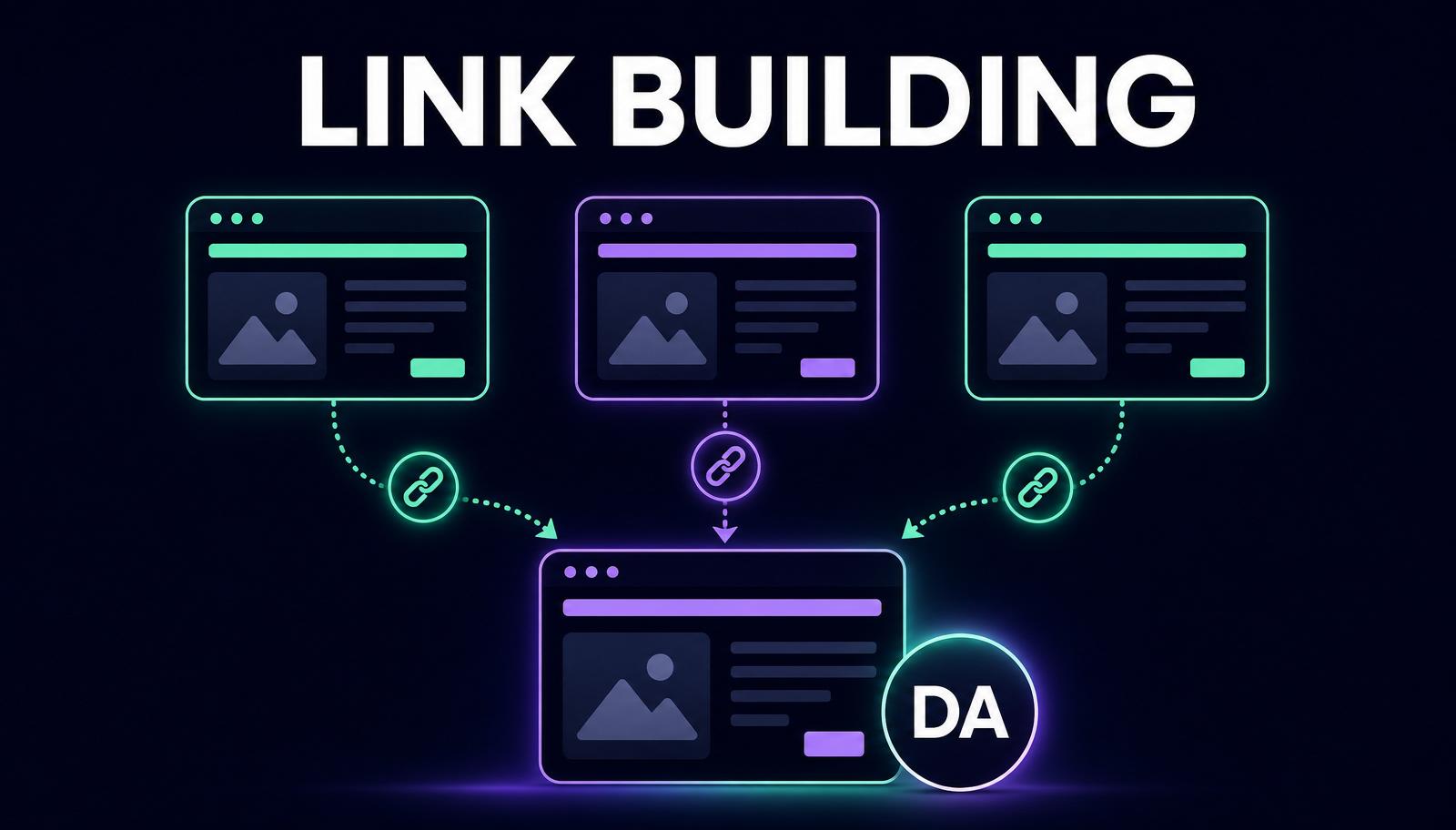
Niche edits are editorial links added to webpages that have already been published. Instead of creating a new guest article, a marketer identifies an existing page and asks its publisher to add a relevant citation, resource or contextual link.
They are also commonly called:
Curated links
Contextual link placements
Existing-content backlinks
Niche edit links
The tactic sounds simple, but the term covers several very different practices. A publisher may voluntarily add a useful new source to improve an article. A company may pay for a disclosed sponsored placement. A link seller may insert followed links into dozens of unrelated relevant site. In the worst cases, a link may be added without the website owner’s authorization.
Those activities should not be treated as equivalent.
A legitimate niche edit should make the existing article more accurate, complete or useful. When the only purpose is manipulating search rankings, the link may violate Google’s spam policies regardless of whether it is called a niche edit, curated link or contextual placement.
Key Takeaways
Niche edits add links to existing content rather than requiring a new guest post.
The strongest opportunities improve the source article for its readers.
Domain-level authority scores are not enough to qualify a placement.
Relevance should exist at the domain, page, paragraph and destination-page levels.
Paying for a followed link intended to affect rankings can violate Google’s link-spam policies.
Paid or sponsored placements should be marked with an appropriate link attribute.
Existing pages may already have traffic and backlinks, but no niche edit can guarantee better rankings.
Link insertions should be monitored because pages, links and attributes can change.
AI tools can assist with research, but automated mass placement creates quality and compliance risks.
Niche edits work best as one part of a broader editorial, content and digital PR strategy.
What Are Niche Edits?
A niche edit is a hyperlink added to a webpage after that page was originally published.
The process involves two separate URLs:
The source page is the existing article where the link will be added.
The destination page is the page that receives the link.
For example, suppose an accounting publication has an older guide to choosing bookkeeping software. A software company has since released original research comparing the time small businesses spend on manual bookkeeping. The publisher could update its existing guide with a citation to that research.
That would be an existing-content link insertion.
The defining characteristic is not that the source page is old, authoritative or highly ranked. It is simply that the link is added to content that already exists.
Prominent guides from SEOptimer, The HOTH, Respona, Saasy Links and Page One Power use largely the same core definition, although they disagree about how safe or valuable the tactic is.
How Do Niche Edits Work?
A niche edit campaign normally follows six stages.
1. Select a cite-worthy destination
The marketer first identifies a page worth referencing, such as:
Original research
A useful tool
A detailed guide
A calculator
A template
A primary source
An updated dataset
A technical explanation
A thin service page is more difficult to justify than an original resource that adds evidence or practical value.
2. Find an existing article
The marketer searches for published pages that discuss a closely related topic.
The ideal source article has a genuine information gap that the destination page can fill.
3. Evaluate the website and page
The opportunity should be reviewed at both the domain and URL levels.
This includes relevance, editorial quality, traffic, backlinks, indexing, outbound links and the surrounding context.
4. Contact the publisher
The marketer explains what should be updated and why the change helps readers.
A credible request focuses on improving the article—not on obtaining a particular anchor or a followed backlink.
5. The publisher reviews the change
The website owner or editor decides whether the resource deserves inclusion and how it should be described.
The publisher should retain final editorial control.
6. The placement is monitored
After publication, the marketer verifies that the destination, anchor text, link attribute and surrounding wording are accurate.
The link should then be checked periodically for removal or modification.
Types of Niche Edits
The common white-hat, gray-hat and black-hat labels are subjective. A clearer framework classifies niche edits according to how and why the link was added.
Earned Editorial Updates
An earned editorial update happens when a publisher independently determines that a resource improves an existing article.
Examples include:
Adding a new primary source
Replacing outdated research
Citing original data
Adding an expert definition
Linking to a useful calculator
Expanding a recommended-resource section
No payment or reciprocal ranking arrangement is required.
This is the most defensible form because the publisher has a reader-focused reason for making the change.
Broken-Link Replacements
Broken-link building begins by finding a source page that links to a resource that no longer works.
The outreach identifies the broken destination and suggests a relevant replacement.
The replacement should closely match the original purpose of the citation. Replacing a broken educational guide with an unrelated sales page does not improve the article.
Unlinked-Mention Reclamation
A publisher may mention:
A company
A person
A product
A research study
A tool
A report
without linking to its official source.
The named entity can request that the publisher add a link so readers can verify or explore the reference.
The HOTH includes both broken links and unlinked brand mentions among its suggested acquisition methods.
Sponsored Link Insertions
A publisher may accept payment to update an existing page with a sponsored reference.
That is an advertising arrangement, not a purely earned editorial citation.
Google recommends marking paid placements with rel="sponsored". The nofollow value remains acceptable, although sponsored is the preferred designation for advertisements and paid links.
Sponsored content can still generate awareness, qualified traffic or sales. The problem arises when compensation is hidden and the link is intended to pass ranking credit.
Manipulative Paid Insertions
A manipulative insertion occurs when someone purchases a followed backlink primarily to affect search rankings.
Common characteristics include:
Guaranteed followed links
Required exact-match anchors
Irrelevant source pages
Large placement networks
No meaningful editorial review
Identical inserted sentences
Links sold according to authority metrics alone
Websites covering unrelated commercial topics
Google lists buying or selling links for ranking purposes as link spam. Its systems may neutralize unnatural links, and serious violations can result in manual actions.
Unauthorized or Hacked Insertions
Some link insertions are added without the legitimate publisher’s knowledge.
An attacker may compromise a website, modify its database or hide links from the visible page while presenting them to search crawlers.
These are not outreach placements. They are unauthorized changes and potential security incidents.
Google’s spam documentation specifically addresses hacked content, hidden-link abuse and malicious practices.
Niche Edits vs. Guest Posts
The main difference concerns whether the source content already exists.
FactorNiche editGuest postSource contentExisting articleNewly created articleContent productionSmall update or citationFull articleEditorial contextLimited by existing pageDeveloped around new topicPublishing timePotentially shorterUsually longerBrand exposureOften limitedAuthor and brand can be more visibleLink placementAdded to established wordingIncluded in newly written contentEditorial incentiveMust justify modifying old contentNew article provides the incentiveRiskDepends on acquisition and intentDepends on acquisition and intent
A niche edit offers less control because the surrounding article already exists. A guest post requires more work but gives the contributor an opportunity to develop a complete argument.
Neither format is automatically safer or more valuable. Google evaluates whether links are being created primarily to manipulate rankings, not merely whether they appear in old or new content.
Niche Edits vs. Broken-Link Building
Broken-link building is one possible route to a niche edit.
The distinction is:
Niche edit describes the final change to an existing page.
Broken-link building describes the reason and outreach method used to earn that change.
The same distinction applies to unlinked-mention reclamation and outdated-source replacement.
Niche Edits vs. Digital PR
Digital PR usually earns new coverage through:
News
Original research
Expert commentary
Surveys
Reactive insights
Data stories
A niche edit modifies an existing article instead.
Digital PR is generally better suited to broad brand awareness and original media coverage. Niche edits are narrower and depend on an established page having a legitimate reason to cite the destination.
Why Do Marketers Use Niche Edits?
The Source Page Can Be Evaluated in Advance
A new guest post does not yet have performance history.
An existing page can be reviewed for:
Current rankings
Estimated organic traffic
Existing backlinks
Internal links
Publishing history
Search intent
Outbound citations
This makes the opportunity easier to evaluate before outreach.
Less New Content May Be Required
A useful link insertion may require only:
A corrected statistic
A new paragraph
A citation
A replacement resource
A short clarification
That generally requires less production than writing a complete guest article.
The Page May Already Be Crawled
Because the source URL already exists, search engines may discover an update during a future recrawl.
That does not mean authority is transferred instantly or that rankings will improve within a guaranteed timeframe. Crawl frequency, page quality, relevance and Google’s treatment of the link all affect the outcome.
The Placement Can Be Highly Specific
A campaign can identify an exact paragraph where additional evidence is needed.
This can create stronger contextual alignment than publishing a broad article merely to include a backlink.
The Link May Generate Referral Traffic
A link on a page with relevant readers may generate direct visits.
Referral value depends on:
Page traffic
Link visibility
Reader intent
Anchor wording
Placement position
Destination-page relevance
A link that receives qualified clicks can provide value independently of ranking effects.
Are Niche Edits Safe for SEO?
There is no universal yes-or-no answer.
An earned citation added because it improves an article is materially different from buying a followed link through a network.
Google defines link spam as creating links to or from a website primarily to manipulate search rankings. Its examples include paid links, excessive link exchanges, automated link creation and advertorial arrangements that pass ranking credit.
A useful decision test is:
Would the publisher still make this update if the link provided no ranking benefit?
When the answer is yes, the placement is more likely to have a legitimate editorial basis.
When the answer is no—and the only incentive is payment, exchange or ranking manipulation—the risk is substantially higher.
Paid Links and Link Attributes
Paid links are not prohibited as advertising. They need to be identified appropriately.
Google recommends:
<a href="https://example.com/resource" rel="sponsored">descriptive resource</a>
It also accepts:
<a href="https://example.com/resource" rel="nofollow">descriptive resource</a>
The sponsored attribute communicates that compensation or another commercial arrangement is involved.
Link Neutralization and Manual Actions
Paying for manipulative links does not guarantee that Google will count them.
Google has said its systems attempt to identify and neutralize unnatural links at scale. It can also apply manual actions when it detects patterns of unnatural or deceptive links.
This creates a poor risk-adjusted proposition: a company can pay for a placement that produces no ranking benefit while still accepting policy, reputational and financial risk.
What Makes a Good Niche Edit?
A strong placement aligns four layers of relevance.
Domain Relevance
The publisher should cover subjects related to the destination resource.
A finance link on a legitimate finance publication makes more sense than the same link on a general site that publishes content about every imaginable industry.
Page Relevance
The individual source page must address the same topic or a closely related problem.
Domain relevance cannot rescue a link inserted into an unrelated article.
Paragraph Relevance
The surrounding sentence and paragraph should explain why the link is useful.
A link is not contextual merely because it appears somewhere in the body copy.
Destination Relevance
The linked page must fulfill the promise of the anchor and surrounding text.
A citation described as “original industry research” should lead to the research—not a generic homepage or sales form.
Editorial Reason
The publisher should be able to explain why the page was changed.
Strong reasons include:
The old source disappeared.
The statistic became outdated.
The new source contains primary evidence.
Readers need a clearer explanation.
The resource provides a useful tool.
A named organization should be properly attributed.
“Someone paid for a link” is a commercial reason, not an editorial one.
How to Find Niche Edit Opportunities
Find Broken External Links
Search relevant articles for outbound links returning:
404 errors
410 responses
Domain-parking pages
Irrelevant redirects
Removed resources
Create or identify a replacement that fulfills the same reader need.
Replace Outdated Statistics
Older articles often cite research that has been superseded.
A new study can be pitched when it:
Uses a clear methodology
Provides more recent data
Includes the original source
Directly supports the existing statement
Is not merely promotional content disguised as research
Reclaim Unlinked Mentions
Monitor mentions of:
Your company
Executives
Proprietary research
Software
Products
Named frameworks
Request a link when it helps readers identify the official source.
Expand Resource Lists
A resource page may be missing an important category, tool or primary reference.
The proposed addition should be comparable to the resources already included and should not require removing a more appropriate competitor merely to promote your company.
Improve Definitions
Glossaries and educational articles may contain incomplete or outdated definitions.
An expert can supply:
A clearer definition
A primary reference
A standards document
An original diagram
A better example
Use Existing Relationships
Partners, associations, vendors and clients may already have pages where your organization is relevant.
Relationship-based opportunities are often more natural because the entities have a genuine connection.
How to Evaluate a Niche Edit Opportunity
Do not qualify a page using Domain Rating or Domain Authority alone. Those are third-party metrics, not Google metrics.
Check Indexation
Confirm that the URL is accessible and eligible for indexing.
Review:
HTTP status
Canonical URL
Robots meta tag
Robots.txt accessibility
Rendered content
Search Console data when you control the property
An unindexed page is unlikely to provide organic-search visibility.
Evaluate Page-Level Traffic
A domain may receive substantial traffic while the proposed source page receives none.
Review the individual URL’s:
Estimated visits
Ranking keywords
Traffic trend
Geographic visibility
Search intent
Use tool estimates directionally rather than treating them as verified analytics.
Examine Existing Backlinks
Determine whether the source URL has genuine external citations.
Look beyond the raw count and inspect:
Referring-domain relevance
Link quality
Anchor patterns
Sudden spikes
Sitewide links
Network patterns
Review Internal Links
A page that is deeply buried and receives no internal links may be crawled less frequently and attract few readers.
Check whether it is linked from:
Category pages
Related articles
Navigation
High-traffic resources
Topic hubs
Inspect Outbound Links
Review what the page and website already link to.
Warning signs include:
Numerous exact-match commercial anchors
Unrelated industries
Repeated links to the same buyers
Gambling, loans and supplements mixed into unrelated content
Links that appear without editorial explanation
Recent unexplained changes to old articles
Verify Publisher Identity
Look for:
A real company
Named owners or editors
Author profiles
Editorial policies
Contact information
Consistent publishing history
A coherent business purpose
Opaque ownership does not automatically prove a PBN, but it increases due-diligence requirements.
Niche Edit Qualification Scorecard
FactorWeightPage-level topical relevance20%Destination-resource quality15%Editorial reason for the update15%Publisher credibility10%Page traffic and search visibility10%Existing backlink quality10%Outbound-link quality10%Technical indexability5%Audience alignment5%
Reject opportunities that fail core editorial or policy checks, regardless of their numerical score.
Prepare the Destination Page First
Outreach will struggle when the destination page does not deserve citation.
Before prospecting, confirm that it offers something distinctive:
Original research
First-hand experience
A proprietary tool
A strong comparison
A useful template
A well-sourced definition
A technical walkthrough
A current dataset
A clear visual explanation
A generic article that paraphrases the current search results gives an editor little reason to modify an established page.
How to Conduct Niche Edit Outreach
The pitch should identify a specific improvement.
Weak outreach:
Can you add our link to your article? We have a high-quality website and can pay a placement fee.
Stronger outreach:
Your guide currently cites the 2021 version of the industry survey. We published the 2026 edition using the same core methodology and a larger respondent group. The updated results may be useful in the section discussing adoption rates.
The second message explains:
What needs updating
Where the issue appears
Why the new source is relevant
How readers benefit
Niche Edit Outreach Template
Subject: Updated source for your [topic] guide
Hi [Name],
I was reviewing your article about [specific topic] and noticed that the section on [specific issue] references [outdated, unavailable or incomplete source].
We recently published [resource name], which includes:
[Relevant information]
[Original data or feature]
[Reason it improves the section]
The resource may be a useful update for this paragraph:
[Briefly identify the section without demanding specific anchor text.]
Here is the source for review:
[Resource]
Either way, thank you for publishing such a useful guide.
Best,
[Name]
[Role]
[Organization]
How Many Follow-Ups Should You Send?
One or two restrained follow-ups are generally sufficient.
A follow-up should add value by including:
A clearer explanation
A new data point
An alternative resource
A corrected page reference
A shorter summary
Stop contacting the recipient after a rejection, opt-out or final unanswered message.
Commercial outreach should use honest sender information and subject lines and should respect applicable email and privacy requirements.
Anchor Text for Niche Edits
Anchor text should describe the destination naturally.
Branded Anchors
Examples:
Acme Research
Acme’s 2026 industry study
Research published by Acme
These are useful when the source is tied to a named organization.
Article-Title Anchors
Example:
2026 Small Business Automation Report
This works well when citing a specific publication.
Descriptive Anchors
Examples:
recent small-business automation research
a detailed link-quality checklist
current email deliverability guidance
Descriptive anchors help readers anticipate the linked content.
Naked URLs
A visible URL may be appropriate in reference lists, citations and certain resource pages.
Exact-Match Commercial Anchors
Repeated anchors such as “best niche edit service” or “buy niche edits” can appear forced, particularly when sellers require publishers to use them.
Google identifies optimized anchor text in paid articles as a link-spam concern.
The publisher should choose the wording that best serves the article.
Contextual Placement
A good insertion does not simply place a link into an existing sentence.
The surrounding content may need to be rewritten to:
Introduce the source
Explain what it proves
Attribute the information
Clarify its limitations
Update the article’s conclusion
The edit should read as though a careful editor made it—not as though an unrelated link was dropped into the nearest available paragraph.
Technical Quality Assurance
After the link is added, verify the following.
The link is crawlable
Google generally expects standard HTML anchor elements with an href destination.
The destination returns the correct status
Avoid links that pass through unnecessary redirect chains or resolve to error pages.
The source page is canonical
Confirm that another URL is not declared as the canonical version.
The source page is indexable
Check for noindex, access restrictions and robots issues.
The destination is correct
Confirm protocol, subdomain, path and tracking parameters.
The link attribute matches the arrangement
Review whether it is:
Unqualified
Sponsored
Nofollow
UGC
Paid placements should be marked appropriately.
The link is visible to readers
Avoid hidden, cloaked or CSS-obscured links.
The wording remains accurate
The publisher may edit the surrounding sentence in a way that changes the meaning or overstates the destination’s findings.
How Much Do Niche Edits Cost?
There is no standard market price.
Costs may include:
Prospect research
SEO tools
Contact discovery
Email infrastructure
Outreach labor
Content updates
Publisher fees
Agency management
Quality assurance
Link monitoring
Commercial guides currently advertise or report prices ranging from roughly $100 to several hundred dollars per placement, but these figures come from companies operating in the link-building market and should not be treated as universal benchmarks.
The cheapest placement is not necessarily the least expensive outcome.
A low-cost link that is removed, neutralized, placed on a PBN or associated with a manual action can produce negative value.
A more useful calculation is:
Total campaign cost ÷ retained, qualified placements = cost per retained qualified placement
How to Evaluate a Niche Edit Service
Ask the provider:
Are publishers paid?
Are paid links marked as sponsored?
Does the provider own or control any placement sites?
Are PBNs used?
Can you approve each domain and URL before placement?
Can you reject an opportunity without paying?
Are placements guaranteed to be followed?
Who selects the anchor text?
Does the publisher review the destination?
Are traffic and ranking claims based on domain or page data?
How are removed links handled?
How long are placements monitored?
Will the provider disclose the real publication URL?
Are links added through authorized editorial access?
Can the provider explain the editorial reason for every insertion?
A guarantee of followed links on predetermined authority metrics is a warning sign because the provider is selling ranking characteristics rather than editorial value.
Page One Power takes a particularly cautious position, noting that many commercial niche-edit services depend on paid arrangements or PBN-like networks.
Niche Edit Warning Signs
Avoid placements with:
No topical connection
No identifiable publisher
Artificially inflated authority metrics
Sharp traffic collapse
Hundreds of unrelated categories
Obvious link-selling pages
Repetitive commercial anchors
No editorial changes beyond the inserted link
Hacked or unauthorized access
Hidden links
Guaranteed ranking claims
Guaranteed dofollow placement
Pages blocked from indexing
Source pages with no traffic or backlinks
Contracts preventing sponsored-link disclosure
Sellers refusing to reveal URLs before placement
Measuring Niche Edit Performance
Track campaign performance at several levels.
Outreach Metrics
Qualified prospects
Emails delivered
Replies
Positive responses
Placements accepted
Placement rate
Average time to placement
Quality Metrics
Source-page relevance
Page traffic
Referring domains
Anchor type
Link attribute
Indexability
Editorial context
Link retention
Business Metrics
Referral sessions
Engaged sessions
Assisted conversions
Leads
Revenue
Newsletter registrations
Branded searches
Qualified inquiries
Search Metrics
Monitor the destination page’s:
Impressions
Clicks
Average position
Ranking-query distribution
Nonbranded traffic
Referring-domain growth
Do not assume that a ranking change was caused by one link. Search performance can also change because of content updates, internal links, competitors, technical fixes and ranking-system changes.
Use before-and-after periods, annotations and control pages where practical, but describe conclusions as directional rather than certain.
Link Monitoring and Retention
Links can disappear because:
The article is updated
The page is redirected
The publisher changes its policy
The destination breaks
The site migrates
The article is deleted
The link attribute changes
The publisher discovers an unauthorized placement
Monitor:
Source-page status
Link presence
Destination
Anchor text
Link attribute
Canonical URL
Indexation
Referral traffic
Saasy Links is one of the stronger competing pages on this subject because it explicitly includes quality assurance, retention and link-health monitoring in its process.
What Should You Do About Bad Niche Edits?
First, determine whether the link is actually harmful or merely low quality.
When a provider created manipulative links on your behalf:
Stop the campaign.
Document the placements.
Request removal.
Review Search Console for manual actions.
Preserve evidence of removal requests.
Seek experienced assistance when the pattern is substantial.
Google recommends the disavow tool only in limited circumstances, particularly when a considerable number of spammy or artificial links have caused—or are likely to cause—a manual action. It recommends attempting removal first.
Do not upload routine disavow files merely because a third-party SEO tool labels a domain as toxic.
Niche Edits and AI Search Visibility
Some current ranking pages claim niche edits can increase visibility in AI-generated answers. Respona and Saasy Links both emphasize this emerging angle.
The reasonable underlying concept is that third-party pages can help establish:
Brand mentions
Product-category associations
Expert-topic associations
Corroborating descriptions
Comparisons
Citations
However, adding a backlink does not guarantee that an AI system will retrieve, cite or recommend the destination.
For broader entity visibility, the surrounding statement may matter as much as the link.
Compare:
Visit Acme.
with:
Acme is an email outreach platform used to research publishers, verify contacts and manage link-building campaigns.
The second sentence establishes explicit relationships between the brand and several concepts.
Any third-party statement should remain factually accurate and editorially justified. Attempts to manipulate generative answers are also covered by Google’s current spam-policy framing.
Building Stronger Entity Associations
Use consistent, verifiable language across your own site and legitimate third-party coverage.
Clarify:
Who the organization is
What it offers
Which audience it serves
Which topics it has demonstrated expertise in
Which products or studies it created
Which people are associated with it
Where primary evidence can be found
On the article itself, use Article, author, publisher and breadcrumb structured data. Structured data can provide explicit clues about the page and its entities, but it does not guarantee a Knowledge Panel, enhanced result or AI citation.
When Should You Avoid Niche Edits?
Avoid the tactic when:
The destination page offers no citation value.
The only available sites are irrelevant.
The campaign depends on exact-match anchors.
The seller cannot explain how links are acquired.
Publishers are paid for unqualified followed links.
Placement sites appear to be a network.
Your company cannot monitor the links.
The source page has no genuine audience.
The link would mislead readers.
A new guest article or digital PR campaign would provide greater value.
Niche edits should not become the entire backlink strategy.
A balanced program may also include:
Original research
Digital PR
Expert commentary
Guest contributions
Useful tools
Resource development
Partnerships
Community participation
Link reclamation
Niche Edit Campaign Checklist
Before approving a placement, confirm:
The source domain is relevant.
The individual page is relevant.
The paragraph provides appropriate context.
The destination fulfills the link’s promise.
The publisher has a legitimate editorial reason to update the page.
The website has identifiable ownership.
The page is indexable and canonical.
The source URL has genuine visibility or audience value.
Existing outbound links appear editorially controlled.
The anchor text is natural.
Paid relationships are disclosed.
The link attribute reflects the arrangement.
The link was added with publisher authorization.
The destination does not redirect unexpectedly.
The placement will be monitored.
The opportunity remains valuable without assumed ranking benefits.
Frequently Asked Questions
What are niche edits?
Niche edits are links added to webpages that have already been published. They are also called link insertions, curated links or contextual link placements. A legitimate niche edit should improve the existing page by adding a useful source, updated reference or relevant resource.
Are niche edits the same as backlinks?
A niche edit is one method of obtaining a backlink. Backlinks can also come from newly published articles, news coverage, resource pages, directories, tools, citations, partnerships and naturally earned references.
Are niche edits safe for SEO?
They can be relatively low risk when a publisher voluntarily adds a relevant resource because it improves the article. They become risky when followed links are purchased to manipulate rankings, placed on irrelevant websites, inserted without authorization or obtained through PBNs.
Do niche edits violate Google’s policies?
The term itself does not determine compliance. Google evaluates how and why the link was created. Links purchased, exchanged or generated primarily to manipulate rankings can violate its link-spam policies. Paid advertising placements should be appropriately qualified.
Are niche edits better than guest posts?
Niche edits require less new content and let marketers evaluate an existing page before outreach. Guest posts offer greater control over the article, context, author visibility and argument. The better format depends on the audience, resource and campaign objective.
How do you get niche edits?
Common editorial methods include broken-link replacement, unlinked-mention reclamation, outdated-statistic updates, missing-resource outreach and existing partnership pages. The outreach should explain how the proposed resource improves the source article.
How much do niche edits cost?
Costs vary according to research, outreach labor, content updates, publisher relationships, monitoring and whether a sponsored fee is involved. Marketed prices commonly range from roughly $100 to several hundred dollars, but price alone does not indicate editorial quality or safety.
What anchor text should be used for niche edits?
Use wording that accurately describes the destination. Branded names, study titles and natural descriptive phrases are usually easier to justify than repetitive exact-match commercial keywords. The publisher should retain final editorial control.
How long do niche edits take to work?
There is no reliable universal timeframe. Search engines must recrawl the source page and decide how to treat the new link. Any subsequent ranking change depends on relevance, page quality, competition, content, internal linking and many other signals.
Should you buy niche edits?
Buying exposure on a relevant publication may make sense as advertising when the relationship is disclosed and the link is properly qualified. Buying followed links specifically to manipulate rankings violates Google’s policies and may result in the links being ignored or in manual action.
Final Thoughts
Niche edits are not automatically powerful, safe or dangerous.
They are simply changes made to existing content. The quality and risk depend on the editorial reason, publisher, source page, destination resource, acquisition method and link treatment.
The most sustainable approach is to stop thinking of niche edits as links inserted into old articles and start treating them as evidence-based content updates.
Find pages that genuinely need improvement. Create resources worth citing. Explain the reader benefit. Let the publisher control the final wording. Disclose compensation. Monitor the result.
That produces fewer placements than buying links in bulk, but it creates a far stronger foundation for long-term search visibility, referral traffic and brand authority.
Keep going with related Search Brilliance services: Niche Edits, Guest Post Outreach, HARO Links, and iGaming Backlinks.